M.F.A. student Tiffany Nesbit won the 2014 Short Story Contest for "The Metro," a beautifully shaped work on place and identity and stereotypes.
The Catalyst, the College of Arts and Sciences newsletter, enlisted the help of our M.F.A. program for a short story contest among our talented student and alumni writers. The submissions incorporated this issue鈥檚 global theme, with the winner earning a full spread in the Spring 2014 newsletter’s Vision and Voice section. We would like to congratulate the winner, Tiffany Nesbit, M.F.A. 鈥�13, for her story titled, 鈥淭he Metro.鈥�
Following is her thoughtful and compelling work in which the narrator is forced to confront the powerful link between place, identity and stereotypes.
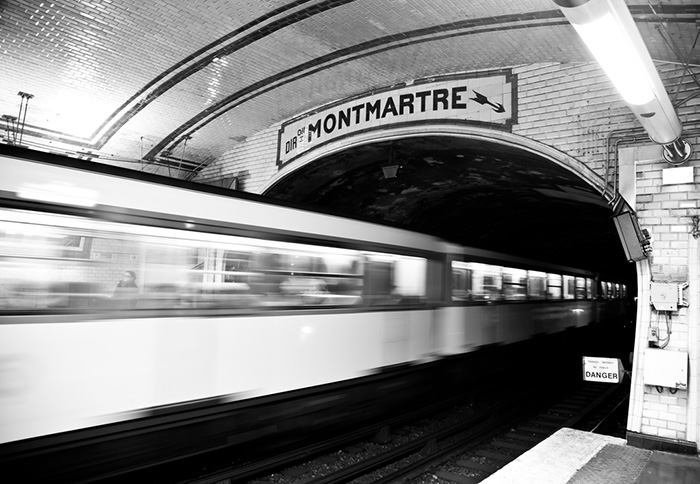
鈥淚 was nineteen years old. I had just begun my studies at , and it was my first free weekend in a long time, and a three-day weekend at that. My girlfriends were still in class, but I was so excited to be at leisure that I decided to go out on my own. I鈥檇 been window-shopping on St. Germaine des Pr猫s all afternoon (you know, of course, that I couldn鈥檛 actually afford anything over there), and then I decided to head over to the Champs just to pass the time. I was too scared to walk into the big fashion houses鈥ooking back, I should have been scared of more important things. As you can imagine, I got bored pretty quickly. But on Friday afternoons the Louvre allowed free entry, so I headed to the metro to get there before closing time. In the station, I inserted my metro pass as quickly as I could because the display said my train would be arriving in a moment. All of a sudden a stern voice from behind me said; Let me see your papers. I turned to see a white officer glaring at me.鈥�
鈥淲hy鈥檇 he ask you that?鈥�
鈥淛ust keep listening; I鈥檒l get to that… Yes, sir, I replied, and began digging in my purse. He scowled at me as I continued to search. Then I started to panic when I realized I didn鈥檛 have them. Don鈥檛 ever leave the house without your papers, Maman always told me. The officers will arrest you.鈥�
鈥淭hey couldn鈥檛 really arrest you, could they?鈥�
鈥淣o, but they could take you to the station and question you for hours, or just leave you sitting there until they felt like letting you go. Whenever Maman used to warn me, I鈥檇 tell her, But I鈥檓 French, so I said that to the officer. You are Nigerian first, Maman used to remind me. Just because you were born here does not mean that you are French. You look Nigerian, and your mother and father were born in Nigeria. The French will never see you as one of them, ch茅rie. I never thought I鈥檇 have to experience her reminder first-hand.
If you do not have your papers then I will have to escort you back to le banlieue, the officer said. French or not. Please, I said loudly. The people walking by were causing a lot of noise; I had to yell to be heard. That was a mistake. Quite a few of the people started looking at me. Poor immigrant, their eyes said. She will be arrested and deported back to Nigeria, or whatever African country she came from. I tried to reason with the officer: I can tell you anything you want to know, I said. How can I prove that I am French? He said, you don鈥檛 look French.
I saw two women walk through the turnstile. They had shiny, bone-straight hair and held expensive purses in the crooks of their arms. And their make-up looked as if it had been applied by professionals. Sisters, I said. I have forgotten my papers and this officer here was about to take me to le banlieue, I don鈥檛 live there! Please, tell him that I am French, like you. Those are not your sisters, the officer said to me in French. Then he said to the women, I鈥檓 sorry, ladies鈥攃arry on. He spoke to them in English. As they walked away, I noticed they were wearing jeans and sneakers, not heels as so many French women do. They had to be American鈥擨 felt so stupid not to have realized.
Now, do you have your papers or do you not, the officer asked me. I do not, I said, and started to cry. Please, I said, don鈥檛 take me to le banlieue. I live in the 14th arrondissement. I am French, truly. People are attacked in le banlieue! Women are raped, and even if nothing happens to me, it will take me a long time to get home from there.
The officer grasped my arm above the elbow. French people know it is the law to carry your papers at all times, he said. Come on. He escorted me down the stairs. I was still crying, but I wiped my tears away with my free hand鈥擨 didn鈥檛 want to give him the pleasure of seeing me cry.鈥�
鈥淭his is a long story, Mom…鈥�
鈥淚t鈥檚 really not. And it鈥檚 important. If you want to go out and explore the world, as you say, it鈥檚 important that you see how other people see us.鈥�
鈥淲hite people don鈥檛 like Nigerians, especially in Paris鈥擨 get it, Mom. And it鈥檚 terrible that they wouldn鈥檛 recognize you, especially because you really are French.鈥�
鈥淚t is not only white people. The officer smiled at those two women; his eyes traveled over their bodies. When we first came to France, before we were officially citizens, Maman told me, In France there is no such thing as racism. It is not good to marry outside of your culture, but people with dark skin are treated very nicely, very fair. Those two women鈥攖heir skin was much darker than mine. And I could see how much the officer wanted them. I wasn鈥檛 nearly as pretty; I didn鈥檛 even have curves back then. Still, I could not figure out what made those two American girls so different from me.
You are very beautiful, the officer said to the Americans in French before catching himself and repeating the sentence in English. Merci beaucoup, one of the women replied, smiling. Her accent was horrible, but her teeth were the whitest I鈥檝e ever seen. Are you from New York or California, the officer asked. The women looked at one another and laughed, hard enough that their cheeks turned pink. I had never seen people with dark skin turn that color. New York, they finally told him. And your parents, where are they from? New York also, the one girl said. But what country do your parents come from? The girls looked at each other once more. I had begun to wonder if they had a secret language they spoke with their eyes. America, they said again in unison.
A train came then, and we all got into the same car. So many people have asked us that since we鈥檝e been here, one of the women said to the officer. As if America is not a correct answer. The officer frowned a little. Here in France we have a lot of Africans, he said. They come here illegally and then like to pretend they are not African. The second woman spoke then. Well, at least they know their ancestry, she said.
I am here, I interrupted. By that time I had understood just enough of their English to know that the two women saw me as the officer did: as an inconsequential person.
Is she being arrested, the first woman asked, addressing the officer as if I had not just spoken. Her tone was one of idle curiosity. I am a French citizen, I said to her in my halting English. I have forgotten my papers. I just want to go home, I won鈥檛 cause any problems.
Usually these Africans have just left le banlieue, the officer said to the women. We take them to the entrance and leave them there. She will not be in any harm.
But I don鈥檛 live there, I said. Please, just let me go! I will walk home. If you take me to le banlieue, I am sure something bad will happen to me. Please, sisters, tell him to let me go.
Uh, we can鈥檛 become involved, one woman said, and she and her friend stood up. This is our stop鈥攚e鈥檙e going to get some shopping done before heading over to the Louvre鈥�
Oh, that sounds nice, said the officer. You know the Louvre is free on Friday afternoons for students? Even for American students? Especially for American students, the officer replied with a smile. And then the girls were gone.鈥�
鈥淲ow. How could they just not care like that? They were black, too.鈥�
鈥淭hat鈥檚 what I am trying to tell you. French, American, they are all the same. If you are not one of them, you do not matter.鈥�
鈥淲hat happened after the women left?鈥�
鈥淭he officer took me to le banlieue and I got mugged that day, as you already know.鈥�
鈥淵es, I do鈥� I mean, before the mugging.鈥�
鈥淚 decided then and there, on the train, that as soon as I was finished with my studies, I would leave Paris and never come back.鈥�
鈥淒id the officer say anything else on the ride to le banlieue?鈥�
鈥淗e did. First I said to him, You know, in Nigeria, women with skin that color would be servants, and you as a white man would be killed for flirting with them. We are not in Nigeria, fortunately, the officer replied. In France we do not care about things like skin color.鈥�
For further information, please contact:
Todd Wilson
Strategic Communications Director听
p 鈥� 516.237.8634
e 鈥� twilson@adelphi.edu