A sample of Honors College students explain what they think makes a student flourish in the classroom. The ideas they present play off of philosophical ideas of open-mindedness.
by Jordan Chapman

础诲别濒辫丑颈鈥檚 is the intellectual center for 285 undergraduate students. That means that, of the 7,610 enrolled students this academic year, Honors College students make up fewer than 4 percent of the Adelphi student body.
What, then, makes an Honors student? Is it their outstanding GPAs, high school class ranks, SAT or ACT scores and academic achievements? Those describe some criteria to be considered for the Honors College, but they also characterize students by their measurable outputs. What is it about the Honors student, then, that allows their passion and drive for education to take hold and flourish?
We queried a sample of Honors students and their ideas weren鈥檛 as varied as one might suppose: The wish to remain available to all viewpoints and possibilities while learning is at the forefront. What鈥檚 interesting is that these students were essentially quoting the definition of open-mindedness, of which John Dewey鈥擜merican philosopher, psychologist and education reformer鈥攁nd Bertrand Russell鈥擝ritish philosopher, logician, mathematician, historian, writer, social critic and political activist鈥攄escribed as an essential aim of any education.
Dewey said, 鈥淸Open-mindedness] includes an active desire to listen to more sides than one; to give heed to facts from whatever source they come鈥o recognize the possibility of error in the beliefs that are dearest to us.鈥� Russell believed open-mindedness in education to be a virtue, one that allows earlier beliefs to be revised or abandoned if necessary.
Allen Barbarovich
Allen Barbarovich, freshman Honors student in , described the term in an equally effective way. 鈥淚 think you learn a lot more, and you learn a lot more thoroughly, when you鈥檙e learning for the sake of learning,鈥� he said. In contrast, when learning with a set objective, 鈥測ou鈥檙e putting up a blinder of sorts to different opportunities you could have been exposed to along the way,鈥� he said.
Honors College students interviewed echoed Barbarovich鈥檚 sentiment: wanting to learn for the sake of learning. The wanting is key. 鈥淚f you want to learn, then you鈥檙e absolutely going to,鈥� said Kelly Hiersche, Honors College sophomore enrolled in the . She鈥檚 also a member of 础诲别濒辫丑颈鈥檚 team.
Hiersche described her education in the Honors College to be as daunting as deconstructing Shakespeare鈥檚 sonnets to as simple as conversing with classmates, who, she and others noted, have an incredible range of backgrounds.

Kelly Hiersche
鈥淸The Honors students are] a special breed in that they relish a diversity of perspectives on things,鈥� said Craig Carson, Ph.D., assistant professor in the . He emphasizes this philosophy鈥攖o learn without agenda鈥攊n each of his classes. 鈥淚 try to reach beyond professional aspirations into what one does when you don鈥檛 think about work鈥o think about the other aspects of what an education actually allows access to.鈥� He believes this teaching style has a better chance to transition into outside-the-classroom peer discussion in a more natural way, which in turn helps the subject matter affect how students might live their day-to-day lives. He also feels strongly that college graduates who are habitually active classroom participants are better prepared to engage with their communities in public discourse after graduation.
鈥淓ach one of us is encouraged to share our ideas in class, but we are also equally challenged by conflicting opinions coming from our classmates,鈥� said , a recent graduate in . 鈥淭herefore, we need to push ourselves to question more, accept new ideas and think critically.鈥�
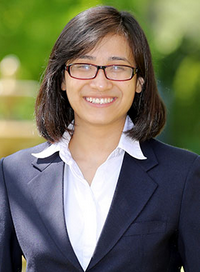
Anustha Shrestha 鈥�15
So the goal here is constant open-formatted learning, and attaining that goal isn鈥檛 always easy. Sometimes accepting new ideas is the hard part, but that seems to be half the fun for these students. They are in the Honors College because they have the capacity to remove any biased filter and accept new ideas for what they are鈥攂rand-new knowledge. It鈥檚 like currency here, and it鈥檚 free-flowing.
So what makes an Honors student?
鈥淵ou have to want to share your ideas. You have to want to hear what others think,鈥� Hiersche answered.
鈥淭he commitment and drive to learn is the first quality,鈥� Shrestha said.
鈥淭he same thing that makes a successful person: a healthy dose of ambition,鈥� Barbarovich stated.
For further information, please contact:
Todd Wilson
Strategic Communications Director听
p 鈥� 516.237.8634
e 鈥� twilson@adelphi.edu